

Aprum
Close each Simples Nacional reporting period by checking invoices, PGDAS-D, DAS, and bank activity in one place. Aprum finds the discrepancy; the accountant reviews it.
Open AprumOpens in a new tab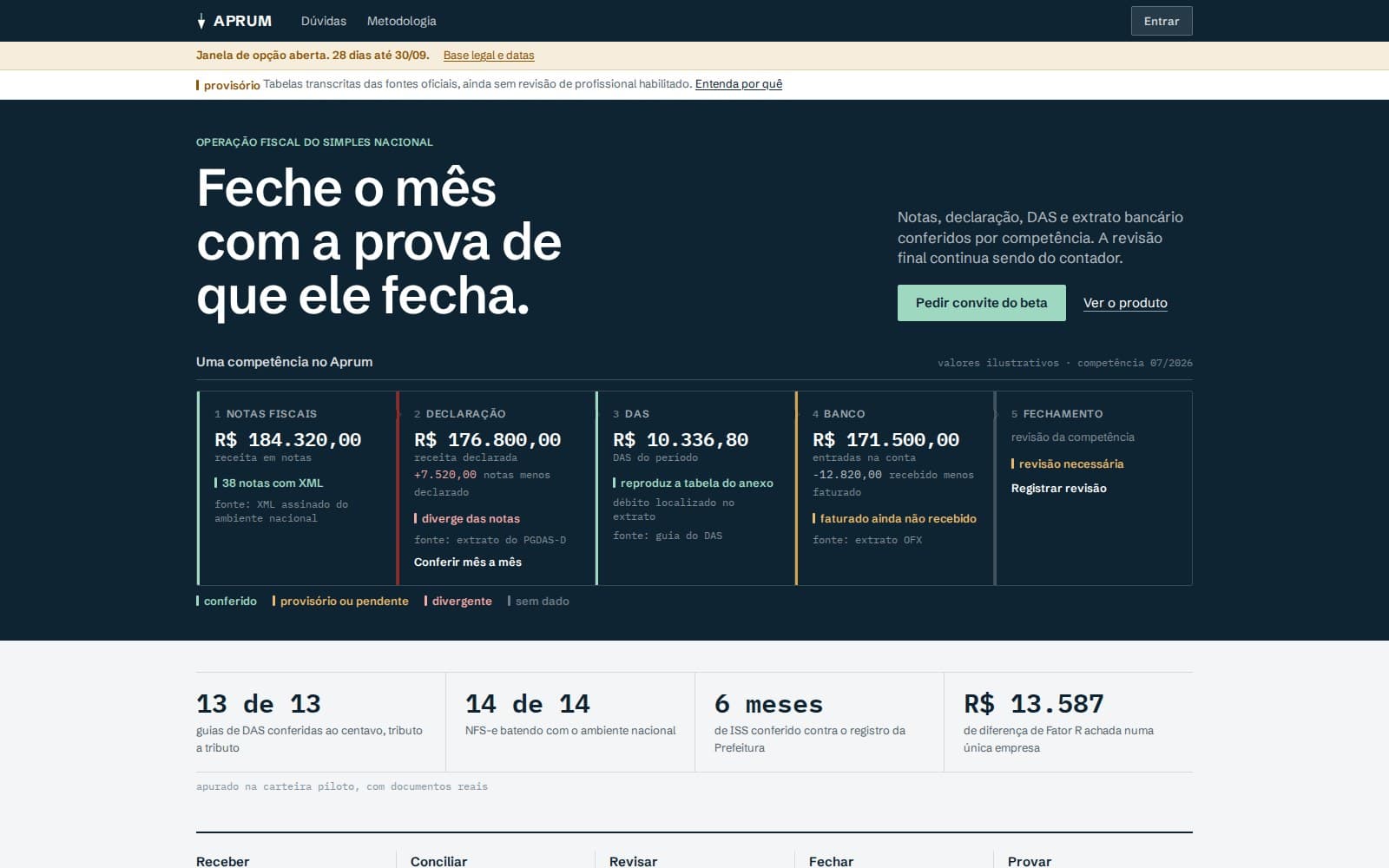
The problem
Where this work tends to get stuck.
Monthly closing is scattered across portals, XML files, PDFs, returns, and bank statements. When those numbers disagree, the difference is often found late, without a clear view of which company requires attention or which document supports each figure.
Aprum brings the sources together by period, reconciles the figures, and shows exactly what matched, what is missing, and what differs. The firm reviews the exception, records its decision, and preserves a report with the engine, table, and source versions used.
Product flow
From input to the next action.
- 01
Receive
Organize NF-e, NFS-e, XML, PDF, OFX, and other documents under the correct company and reporting period.
- 02
Reconcile
Compare invoice revenue, the PGDAS-D declared amount, the DAS payment, and incoming bank activity.
- 03
Review
Put discrepancies and missing documents first, always showing the figures and sources on both sides.
- 04
Close
Record the reporting-period review with its author, date, rationale, and known open items.
- 05
Evidence
Produce firm-branded reports with calculation records and the versions of the engine and tables.
What it already does
- Portfolio ordered by reporting period, discrepancy, and missing document
- Reconciliation across invoices, PGDAS-D, DAS, and OFX statements
- Differences explained with figures, documents, and sources on both sides
- Reviews recorded with author, date, and a traceable history
- Tax-reform module with three IBS/CBS scenarios through 2033
- Firm-branded report with calculations, assumptions, and versions
Where the product stops
- Aprum identifies matches and discrepancies; review, bookkeeping, and professional responsibility remain with the accountant.
- Invoice issuance and PGDAS-D delivery through APIs are still being built and will require separate authorization from the account owner.
- Provisional tables and regulatory references must remain versioned and subject to review by a qualified professional.
- Two sources matching within the configured tolerance indicate reconciliation, not a guarantee that the underlying treatment is correct.
Data and responsibility
What this product processes — and what remains your responsibility.
This summary records the current boundaries of Aprum. It supplements, but does not replace, Prumora's formal documents or specific terms presented during contracting or access.
- Data in scope
- Tax documents, returns, payments, statements, and certificates supplied by the firm may contain business, financial, and personal identifiers. Processing must remain limited to authorized companies, periods, and purposes.
- User responsibility
- The firm must be authorized to access and process the documents, verify source integrity, and submit discrepancies, closings, and simulations to its responsible accounting professional.
- Availability and limits
- The invitation beta provides reconciliation and indicative simulations. Features under construction, provisional tables, and regulatory references are identified in the product; Aprum does not provide legal or tax advice.
Other products
Explore Prumora's other product.
A direct conversation
Want to talk about this product?
Tell us how the routine works today and where the greatest friction lies. You do not need a perfect brief.